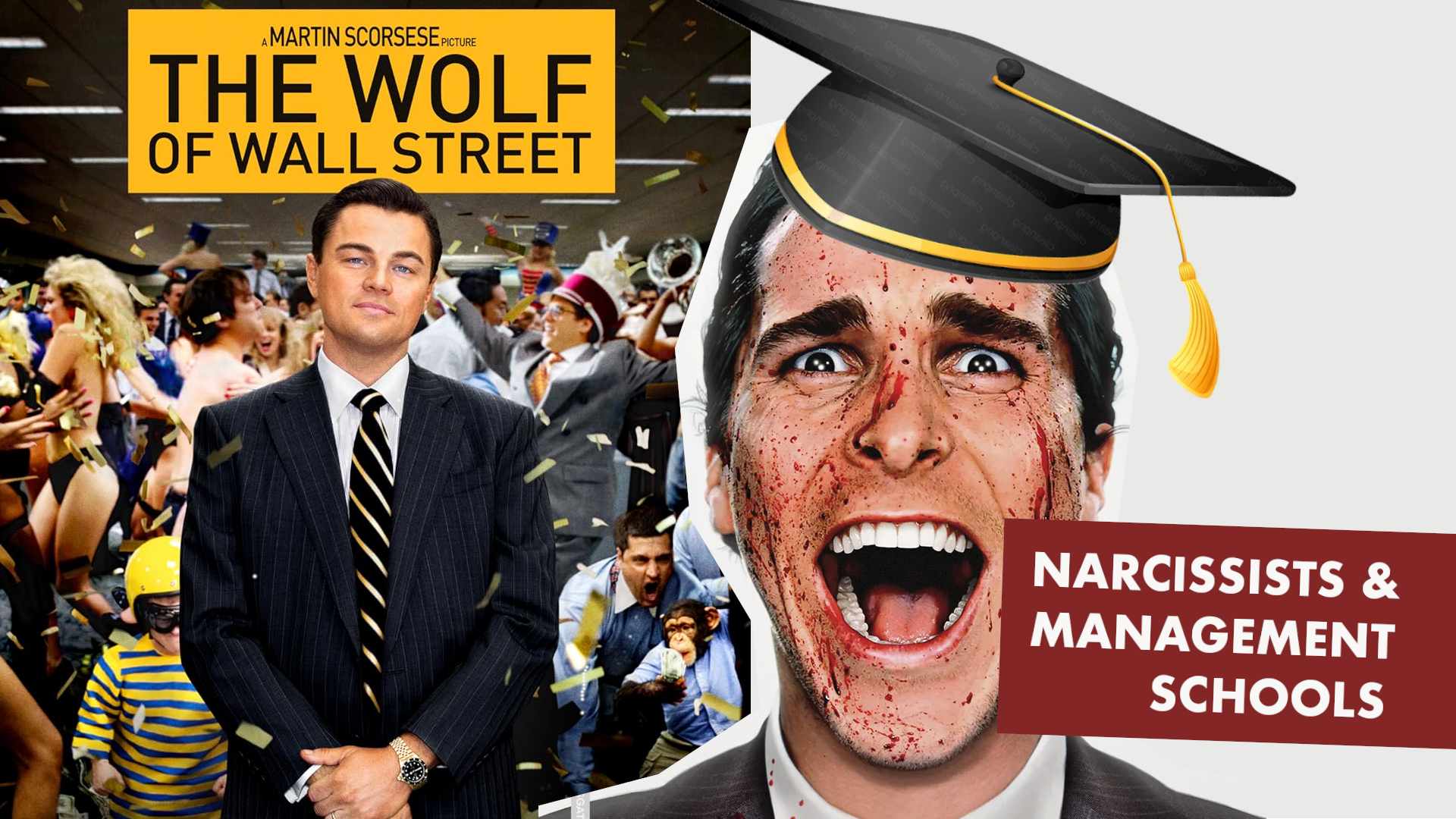
How management schools accidentally create a narcissist economy
During the 1970s, a paradigmatic shift redefined the economy, sparking a surge in business schools. Since then, we have seen a steady decline in innovation and an increase in academic misconduct. This video highlights the rise of the 'Generalist' manager and how unverified theories destroyed good practices—as warned by professors from London Business School and Harvard.
How can wellbeing be decreasing when science is advancing? Why we must rethink cultural research
Medicine and technology are undeniably advancing. We live longer, and infrastructures are more secure. But what about culture? Historical research shows the same destructive patterns repeating—the opposite of what research should achieve. If medicine cures diseases, why hasn't cultural research cured these cycles? Is this a sign that our methods of cultural research must be fundamentally reexamined?
The Future of Innovation is Human: Why we are tired of competition and crave connection
Society promotes a shift from individualism toward cooperation, exemplified by SDG 17: Partnerships. Yet, data shows rising competition and workplace bullying. As technology fosters an increasingly synthetic world, the ultimate competitive advantage will be authenticity. In an era of artifice and slogans, reality becomes the most valuable asset.
Is innovation random? The reason why we may be just perpetually changing
"Progress," "innovation," and "research" are widely promoted within our society. But can we say that we are progressing? This episode critically examines whether the narrative of constant progress is failing us. We explore whether our efforts are leading to real societal improvement, or are a perpetual cycle that brings us back to familiar challenges through different technologies.
Is "bad luck" sabotaging your research? Academic dishonesty and the decline of innovation
Did you know that a progressive decline in innovation has been registered after the 1960s? And simultaneously, an increase in academic dishonesty has been observed? In this video, I explore the potential systemic effects of "misfortune" on science - that is, when misfortune is blamed to cover up for unprofessional behaviors.
Top 4 things we need to change in research to start innovating again
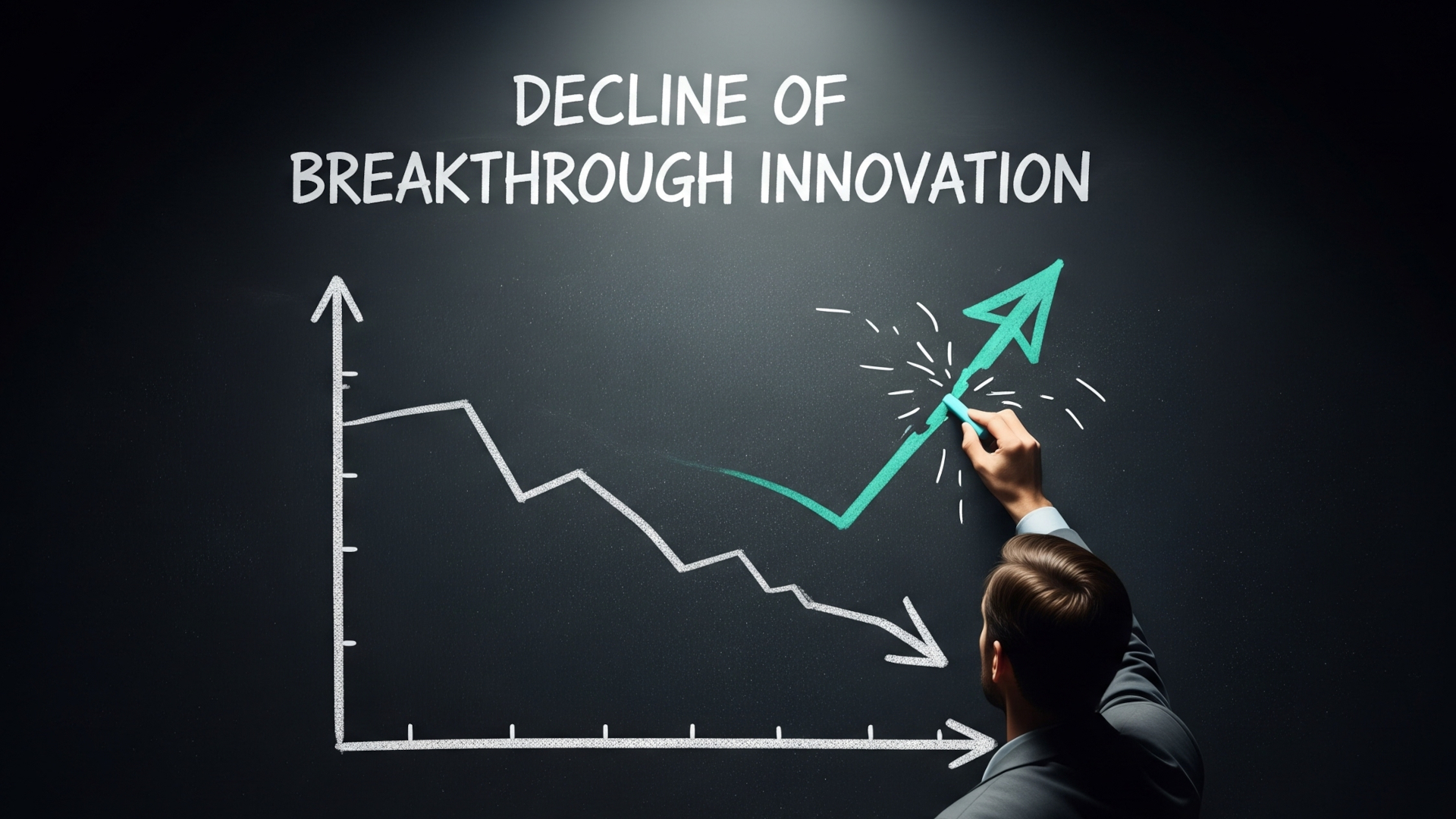
Power abuse is not the only issue that hinders our innovation ecosystem. In this episode we go through some of the problems that contribute to the observed decline in breakthrough innovation. It includes four chapters: Publish or perish; Decline of Quality of Researchers; Science Advances On Funeral at a Time; Research Funding May Disadvantage Breakthrough Innovation.
Can't we innovate anymore? Why power abuse in research is the real threat to sustainability
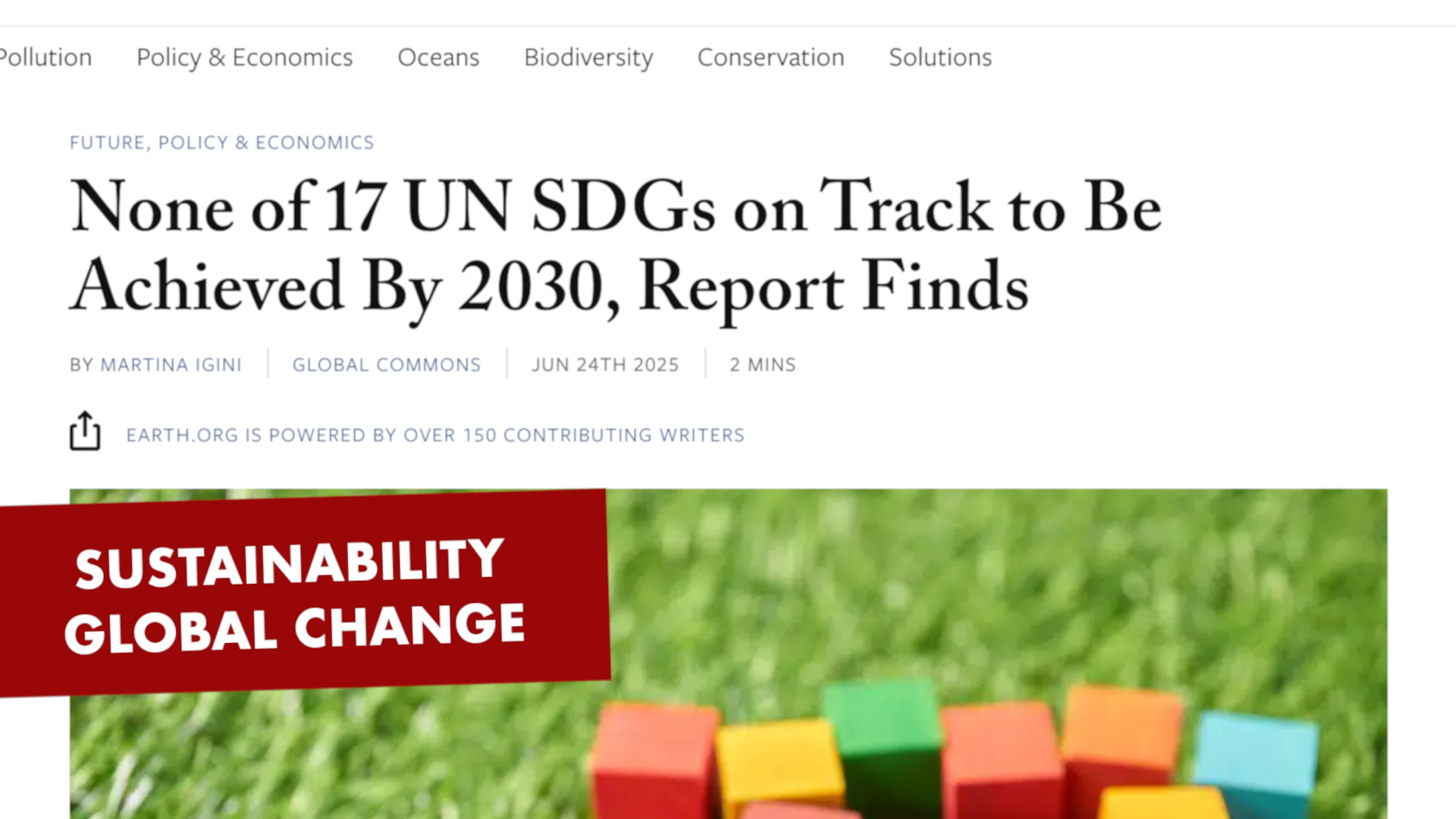
Power abuse doesn't just affect individuals; it's a danger to innovation itself. Did you know that the United Nations has highlighted that we'll only reach 17% of our planned Sustainable Development Goals (SDGs) targets by 2030, with many even going in reverse? Power abuse can sabotage promising ideas and talented researchers, affecting the entire ecosystem. It's no surprise we can’t reach our goals.
Should career harm get redress? My story: Academic hostile environments, redress & continuity
After the FWF upheld my rights to pursue my original research, they gave the option to submit a new project proposal to the ESPRIT program. Upon submitting this proposal, my entry into the program was barred because I had exceeded the 5-year post-PhD eligibility requirement. Should there be mechanisms to ensure the academic continuity of those who have been harmed?
Is power abuse undermining innovation in Europe? The project that got canceled for the wrong reason
This episode details my experience with a project proposal submitted to Creative Europe. The idea had previously earned significant recognition in Europe for the Creative and Cultural Industries (CCI), including within the Startup Europe Accelerathon program. However, the project was ultimately rejected due to a manifest error in the guidelines and the abuse of power by an officer of the EACEA, who provided inadequate reasoning for the conclusions.
The dark side of research. Will we ever break the silence?
Power abuse is a taboo topic in research. Like Voldemort in the popular Harry Potter series, it's something that must not be named. Fortunately, more and more voices are emerging in academia to break this silence. In this episode, we'll explore how this taboo manifests, the strategies power abuse exploits to maintain control, and the critical importance of speaking up and supporting those who do.
I investigated power abuse in a EU call for innovation
Following my video on an alleged instance of power abuse during a complaint process in a EU call, I investigated the matter and requested the release of my files under Regulation 1049/2001. In this episode, I review the handling process of my complaints to the EACEA and European Ombudsman, highlighting concerning patterns of avoiding addressing the core arguments of the applicant.
Academia & Mental Health: A Review
Is university stress and student burnout reaching a breaking point in 2026? From the loneliness epidemic identified by the Surgeon General to the 40% spike in medication for PhD mental health, we are looking at a systemic crisis. This video explores the dark side of academia, narcissism in professors, the "for what?" attitude of young adults, and why so many feel like disposable assets in a hyper-competitive world.
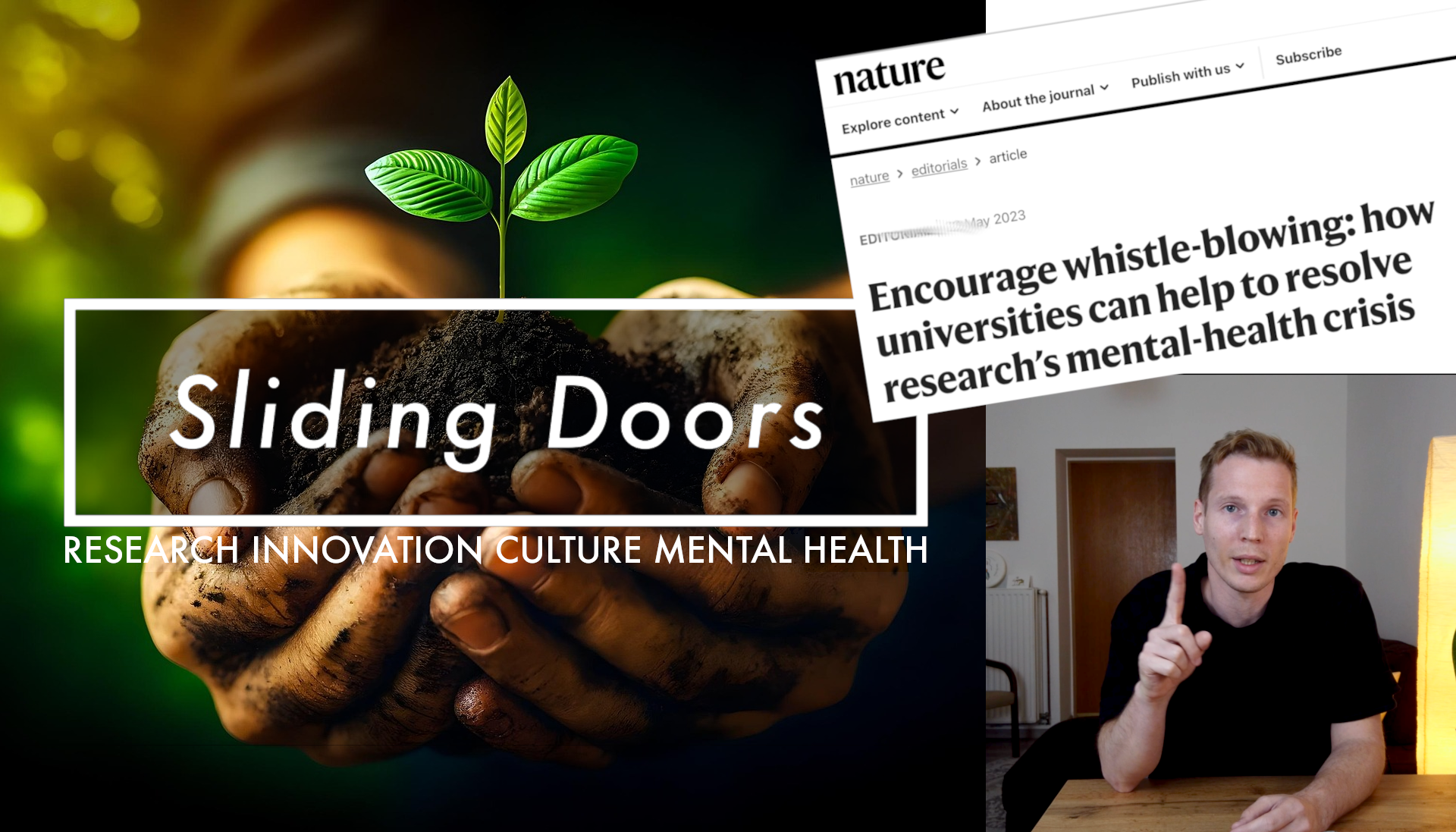
Sliding Doors: Innovation, Research, Culture, Mental Health
This episode introduces the scope of the series. Whistleblowing is increasingly recognized as a cornerstone for scientific integrity, especially within research environments often undermined by pervasive instances of abuse of power and bullying. Yet, whistleblowers frequently face deep stigmatization in academia, risking severe career repercussions for doing what is right and fostering a safe and respectful environment.
I blew the whistle against academic misconduct and part of my evidence was undermined
I wrote a scientific research proposal for an Early Career Researchers grant. Upon its completion, my prospective mentor suggested that he be listed as PI, to apply for a bigger grant and support a PhD student with a scholarship, with the explicit understanding that I would lead the project. However, immediately after the grant was awarded, he sidelined my research and removed me from leadership.
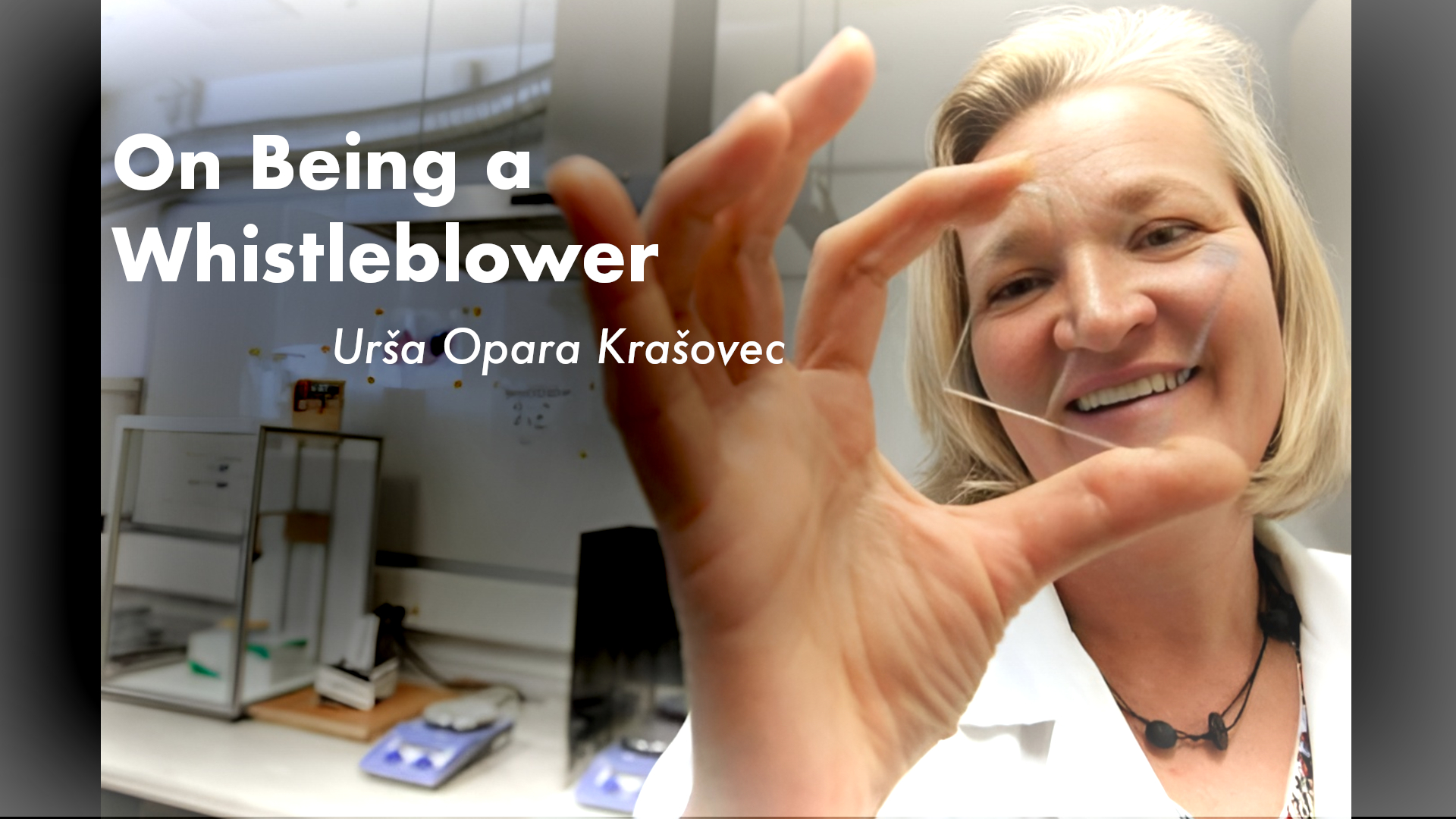
On Being a Whistleblower: From One Who Has Walked the Path. A Letter by Urša Opara Krašovec
Urša Opara Krašovec is a chemist and scientific counselor at the University of Ljubljana. Since 2013, she has been actively involved in raising awareness of research integrity challenges. She served as Vice-chair of the European Network of Research Integrity Offices (ENRIO). In 2022, she was a member of ENRIO's Working Group on Whistleblower Protection and was invited to write a "letter to the reader" for the ENRIO Handbook for Whistleblower Protection in Research .
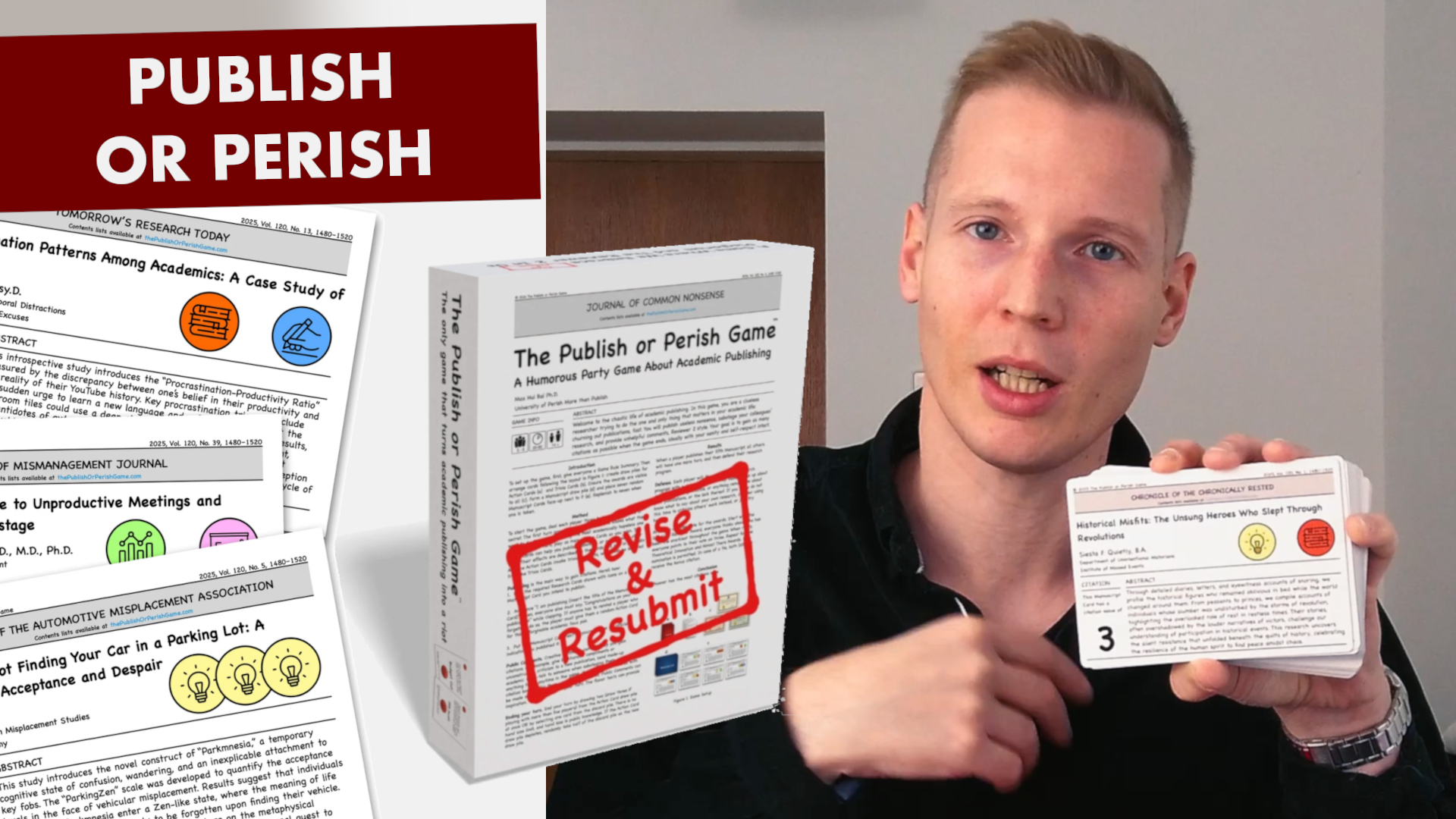
The "Publish or Perish" Game | Review | Joking about academia's publishing pressure
Discover with me this fun initiative by Max Hui Bai, who created a new board game titled Publish Or Perish, centered on the academia's obsession over publishing.